
The laboratory of Genetics and Evolution of Behavior

Language
Wang Guodong's Research Group Collaborates with the Biodiversity Big Data Center to Build the Dog10K Multi-Omics Database for Dogs

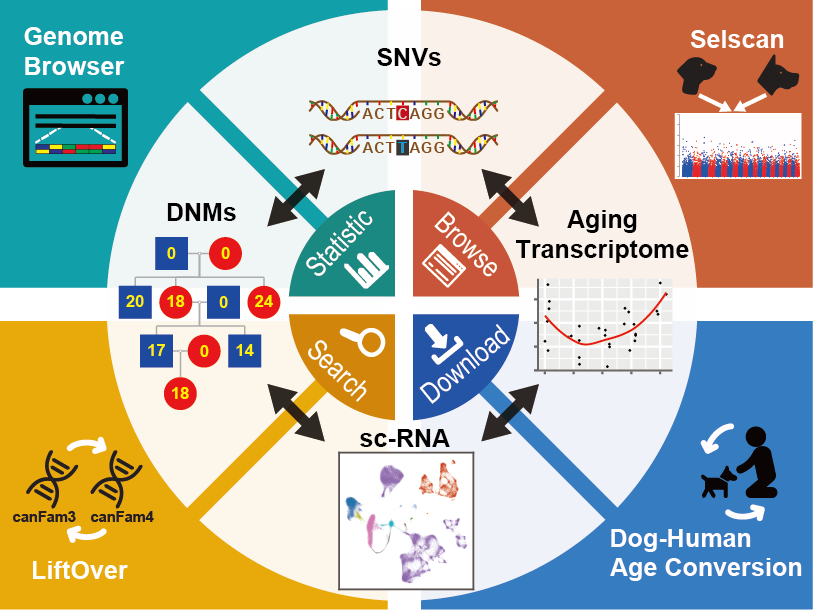
The diversity of dog breed phenotypes and the genetic risks of dog-related human diseases make dogs an ideal model for studying the genetic basis of complex traits and human biomedical models. Dog10K is an ongoing international collaboration project aimed at revealing the genetic basis of phenotypic diversity, diseases, behaviors, and domestication history in dogs. To better display and utilize these vast datasets, Wang Guodong's research group has partnered with the Biodiversity Big Data Center to establish the Dog10K (https://dog10k.kiz.ac.cn/) database, a comprehensive multi-omics database for dogs. [More]
Wang Guodong's Research Group Reveals the Genetic Origin and Breeding History of Nordic Modern Dog Breeds Using Museum Samples

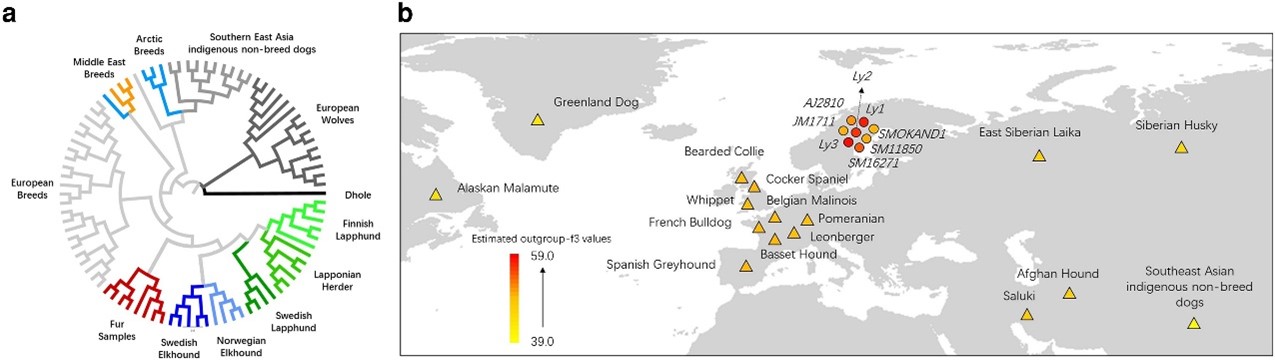
Due to the extinction of founding populations, research on the origins and extreme morphological evolution of modern dog breeds is limited. Here, we analyzed dog hair samples obtained from traditional Swedish costumes dating back 100-200 years to explore the origins and artificial selection of modern Nordic breeds such as the Lapponian herder and the moosehound. [More]

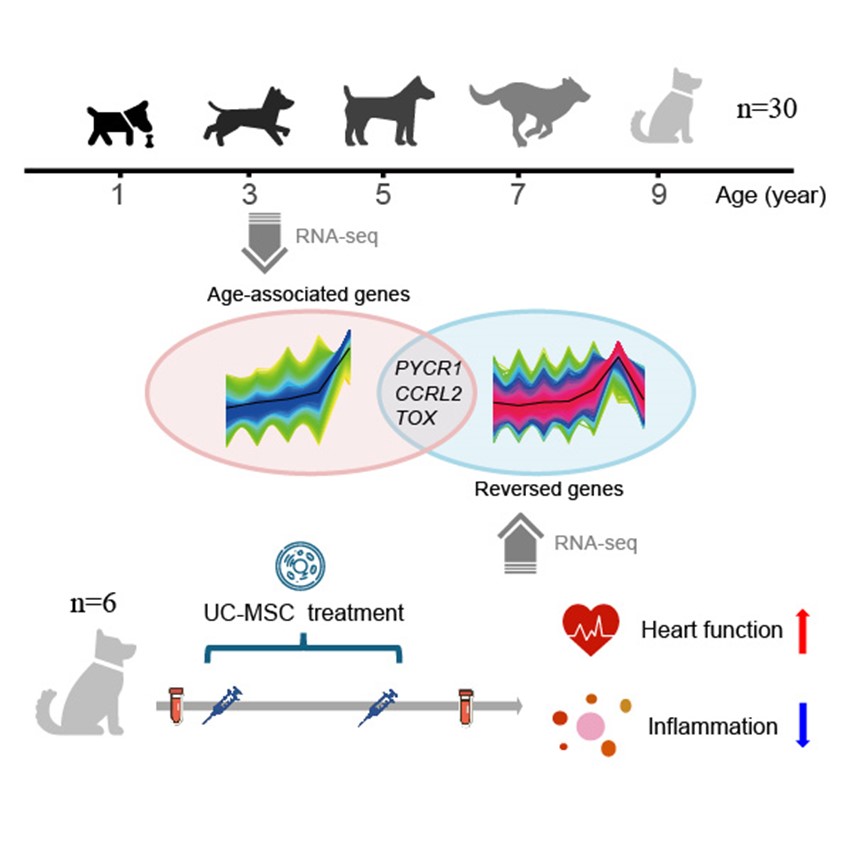
Wang Guodong and He Yonghan's Collaborative Team Achieves New Progress in Canine Anti-Aging Research

Aging has long been a subject of intense interest as a physiological phenomenon, yet the mechanisms behind age-related functional impairments remain unclear. Establishing reliable animal models for aging-related diseases is crucial for treating these conditions and extending human lifespan. Dogs, being one of the first domesticated animals and having long coexisted with humans in similar environments and diets, offer a promising model that may overcome many limitations of aging animal models. However, this model is still underdeveloped and requires further exploration. [More]

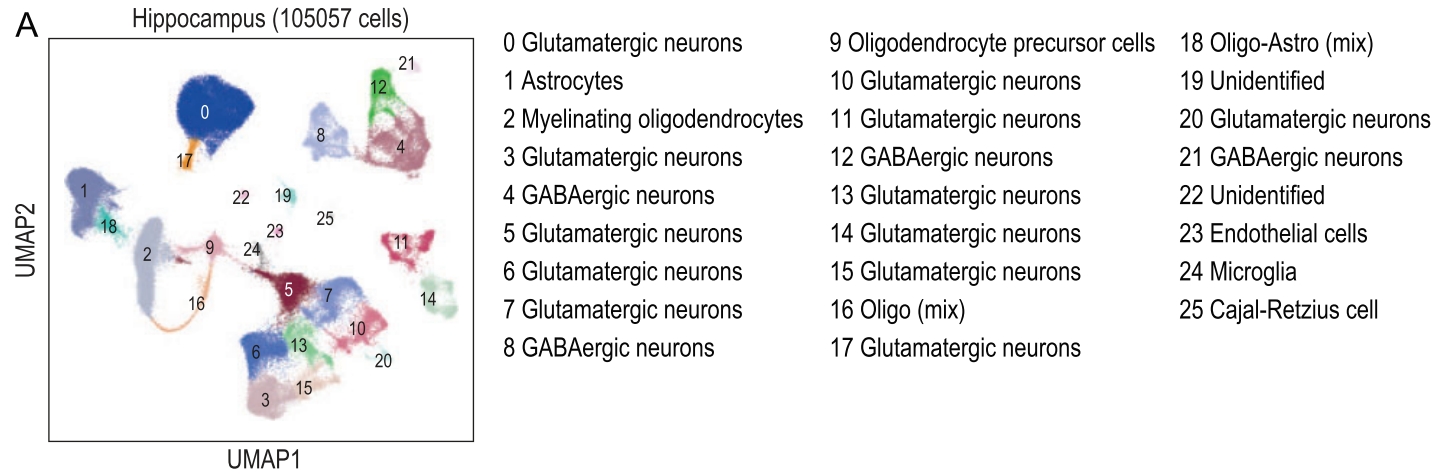
Professor Wang Guodong Leads the Construction of the Canine Hippocampal Single-Cell Atlas and Reveals the Relationship Between Cell Types and Domestication

The hippocampus is a crucial component of the brain's limbic system, involved in processes such as episodic memory and spatial cognition. During domestication, the hippocampus also plays a significant role, such as in altering fear memory in domestic chickens, reducing fear responses in domestic rabbits, and enhancing cognitive function in pigeons. Whole-genome studies have shown that genes related to hippocampal synaptic functions were strongly selected during the domestication of dogs. [More]