




The laboratory of Genetics and Evolution of Behavior

Language

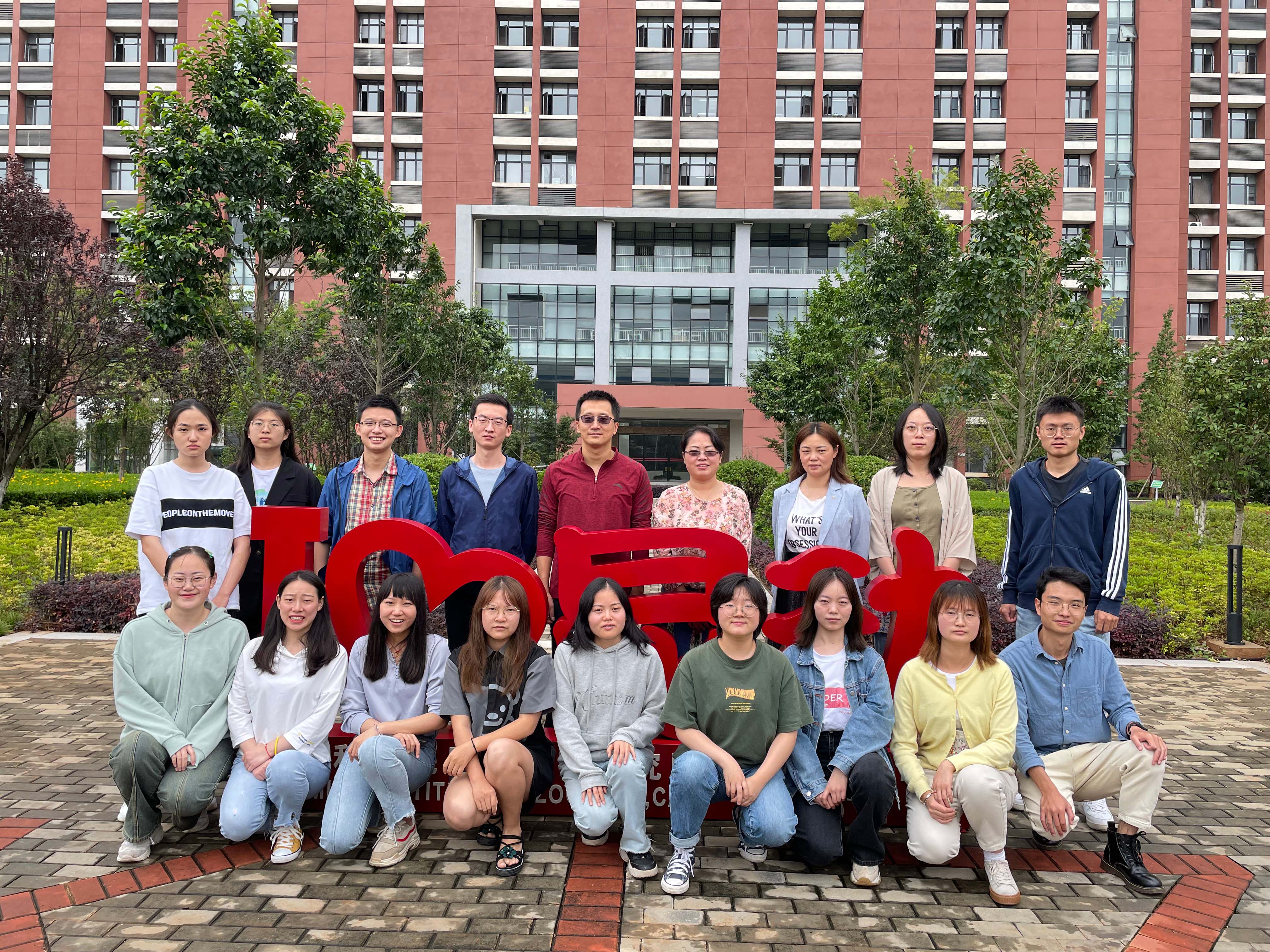
Group Photo

groupPhoto1

September 2024

groupPhoto1

September 2023

groupPhoto1

September 2022

groupPhoto1

October 2021

Laboratory Introduction:

Complex and diverse behaviors are one of the fundamental differences between animals and plants, and are the reason for the vibrant diversity in the animal world. This research group mainly focuses on domestic dogs as a study object, aiming to explore behavioral genetics from an evolutionary perspective. Behavioral genetics studies the inheritance of complex behaviors and the mechanisms of gene-environment interactions. With the advancement of science and technology, the genetic analysis of behavior evolution increasingly requires interdisciplinary collaboration, involving evolutionary biology, genetics, neuroscience, and other fields. The development of omics technologies (genomics, single-cell omics, spatial omics, etc.) and the application of neurobiology (electrophysiology, two-photon microscopy, fMOST, etc.) provide excellent technical conditions for the advancement of behavioral genetics.

For example, in the study of dog diet, our research first clarified the convergent evolution between domestic dogs and humans in terms of diet (2013 Nat Commun), and the subsequent genome assembly work identified a new gene related to fat synthesis in domestic dogs (2019 Natl Sci Rev), further elucidating the genetic evolution mechanism of the dietary transition from carnivory to omnivory in dogs. The 2021 study further discovered that the diet of domestic dogs has significant convergent evolution with human dietary patterns, with European dogs being genetically better adapted to dairy consumption than Asian dogs (2021 Mol Biol Evol). These studies demonstrate the crucial role of agricultural civilization in the dietary transition of domestic dogs.
Main Research Directions:

1) The genetic mechanisms of the origin, domestication, and artificial selection of domestic dogs. We use ancient DNA technology and genomics to explore the origin and domestication history of domestic dogs. We also use population genetics to explore the mutation rate, genetic maps, allele frequencies, and the genetic mechanisms of artificial selection, examining the similarities and differences between artificial selection and natural selection in terms of their underlying genetic driving forces.

2) The polygenic interaction mechanisms of complex behaviors in domestic dogs. This direction focuses on domestic dogs as research subjects, utilizing high-precision quantitative behavioral phenotyping and genomics, neurobiology, and other technologies to investigate the genetic and cellular biological mechanisms of complex behaviors. We also use gene-editing technologies to reproduce complex behavioral traits in large animals and create canine models of psychiatric disorders.

News:

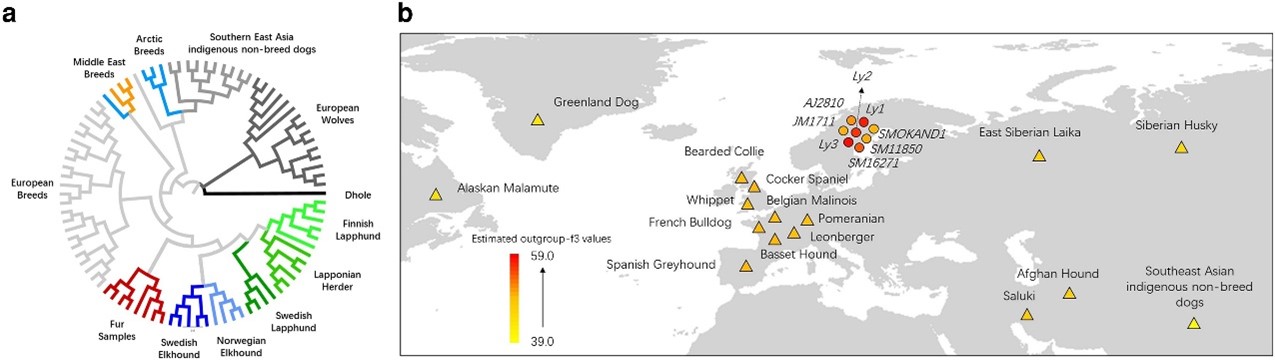
Wang Guodong’s Research Group Reveals the Genetic Origin and Breeding History of Modern Nordic Dog Breeds Using Museum Samples
Wang Guodong’s Research Group Reveals the Genetic Origin and Breeding History of Modern Nordic Dog Breeds

Since the founding populations have been extinct, there has been little research on the origin and extreme morphological evolution of modern dog breeds. In this study, we analyzed dog hair samples obtained from traditional Swedish garments from the northern part of Sweden, dating back 100-200 years, to explore the origin and artificial selection of modern Nordic Laika and Elk Hound breeds. [More]

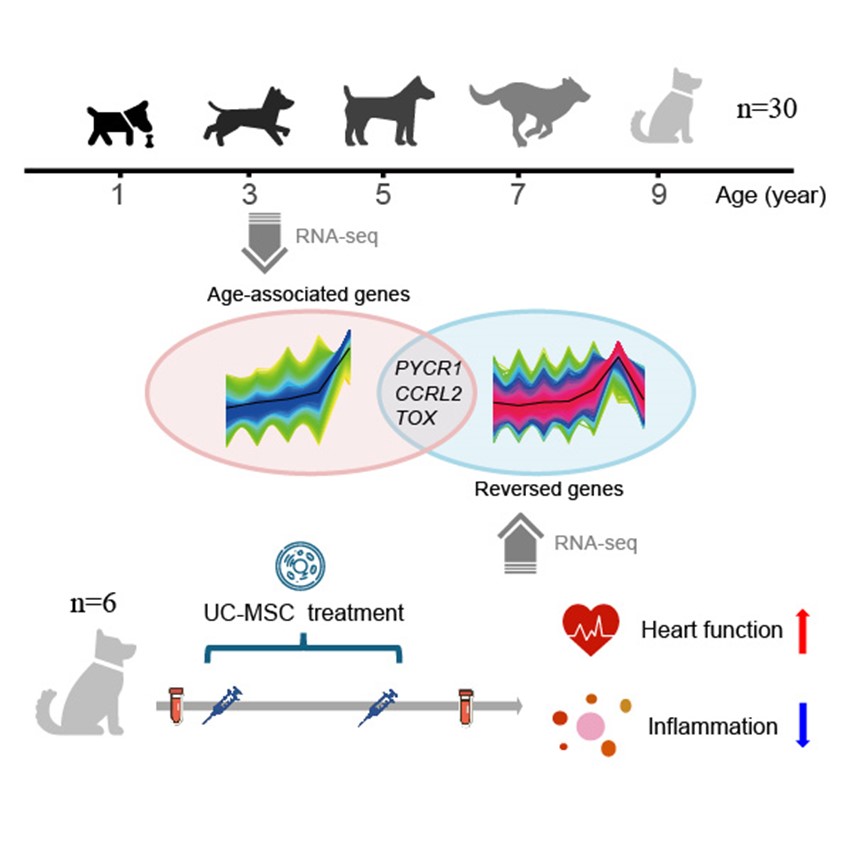
Wang Guodong and He Yonghan’s Collaborative Team Achieves New Progress in Anti-Aging Research on Domestic Dogs

Aging has long been a topic of great concern in physiology, and the pathogenesis of age-related functional disorders has yet to be fully understood. Establishing a good animal model is crucial for treating age-related diseases and extending human health span. Dogs, as one of the earliest domesticated animals, have long coexisted with humans and share similar living environments and dietary structures. They are expected to overcome many limitations of aging animal models, but this model is still imperfect and requires further exploration. [More]